The Sprinkle Standoff: A 2026 Kitchen-Table Census of Buns, Cones and Lunchbox Survivors
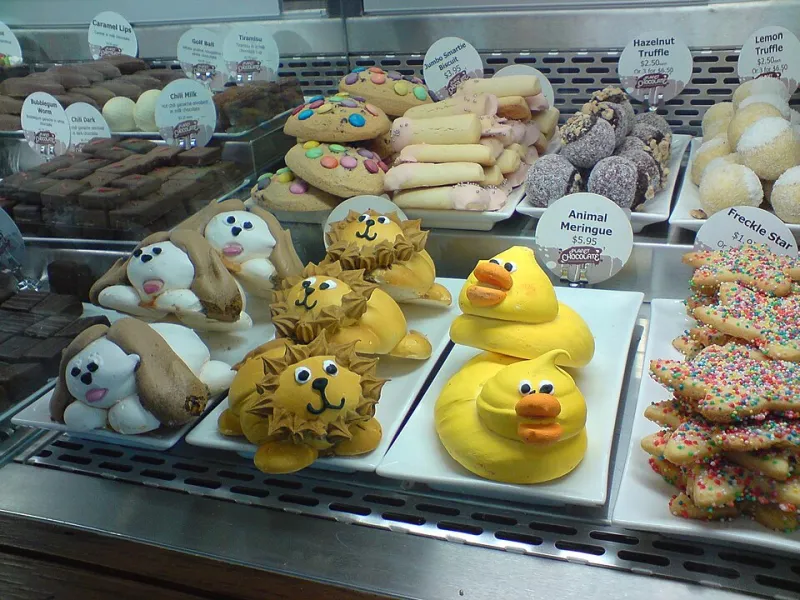
Photo: Alpha, CC BY-SA 2.0, via Wikimedia Commons
There is a particular kind of British optimism that comes in a small paper pot. It is brightly coloured, faintly chaotic, and it costs less than a bus fare. I refer, of course, to sprinkles: the sugar strands, flakes, silver balls and hundreds and thousands that turn a plain bun into a party and a scoop of vanilla ice cream into a seaside memory.
This is not a solemn scientific paper. It is a kitchen-table census, conducted in 2026 with a Bunsen burner-free approach, a packet of kitchen roll and several family members who were told this was a taste test and therefore legally obliged to take part. The brief was simple: sort the classics from the impostors, measure crunch, assess colour bleed, and find out which sprinkle best survives a lunchbox by home time.
The Official Sprinkle Hierarchy (According to Us)
First, the categories. In the blue corner: hundreds and thousands, those tiny, hard, near-spherical dots that cling to icing with quiet desperation. In the pink corner: sugar strands, also called jimmies in some quarters, though in Britain we tend to call them strands and then argue about it. Then come the larger flakes, the flat rainbow shards that look like an accident in a stained-glass window, and finally silver balls, the tiny metallic cannonballs that have ruined more fillings than any sweet should.
There are also chocolate strands, which are a separate and more serious business, and the less said about the anaemic supermarket own-brand dots the better. This is a census, not a tribunal. Although, admittedly, some evidence was heard.
Crunch, Smudge and the Colour-Bleed Question
We started with crunch. The tiny dots offered a pleasing, almost peppery crackle against soft buttercream. They are not subtle. They do not dissolve; they simply announce themselves and then get on with it. Sugar strands were softer, with a slight resistance that made them feel more decorative than functional. The flakes gave the best texture of the lot: a proper shard-like snap followed by a quick melt.
Silver balls were the most divisive. One tester described them as tasting like a rumour of sugar, which is accurate. They are less a flavour and more a dare. Another tester noted that they make a fairy cake look like it is wearing jewellery to a barbecue. Fair.
Colour bleed is the true test of a sprinkle's character. Put them on white icing and leave them for an hour. The good ones stay crisp and bright. The bad ones leak a watery rainbow into the frosting, making the whole bun look like it has been crying. Hundreds and thousands held their shape best. Sugar strands were respectable. The cheap flakes bled like a damp watercolour. Silver balls, naturally, did not bleed; they merely sat there, gleaming and unbothered, like tiny metal critics.
The Lunchbox Endurance Trial
This was the headline event. Each sprinkle was applied to a small fairy cake, boxed with an apple and a cheese string, and sent to school in a lunchbox that had been shaken about in a rucksack for approximately six hours. The results were brutal.
Hundreds and thousands performed admirably. They stayed mostly on the icing, with only a light scattering across the cling film. Sugar strands survived in clusters, though a few had migrated to the corner of the box and were later found in a trouser pocket. Flakes were the weakest. They softened, slumped and left a faint multicoloured smear on the lid, which looked less like lunch and more like a small crime scene.
Silver balls were the wildcard. They stayed exactly where they were put, which sounds good until you remember they are hard enough to cause a minor dental incident. One tester bit down on a silver ball with the confidence of a person who had forgotten it was there. The resulting face was not one of joy.
The Lunchbox Champion
The winner, by a clear margin, was the humble hundreds and thousands. They are not the poshest, the prettiest or the most sophisticated. But they cling on, they crunch, and they do not turn a lunchbox into a swamp. They are the sprinkle equivalent of a reliable friend: small, bright, and slightly annoying when they get everywhere.
Second place went to sugar strands, which lost points for their tendency to travel. Third place: the rainbow flakes, which are wonderful on a cupcake eaten immediately and a liability on a cupcake eaten at 12.15pm in a school hall. Silver balls came fourth, purely on the grounds that they are more decoration than foodstuff and should perhaps be treated as such.
A Note on Ice Cream and Nostalgia
We also tested the classic ice-cream cone scenario, because a 99 is not a 99 without a dusting of something. Hundreds and thousands won again, though the flakes made a strong case for themselves when eaten outdoors, where they can fall onto the grass and become part of the experience. Silver balls on ice cream are a bold choice. They do not melt, they do not blend, and they give the whole cone the mouthfeel of a jewellery box.
The nostalgia factor is hard to ignore. A bun with sprinkles tastes like a birthday party in a church hall. A cone with hundreds and thousands tastes like a seaside trip that probably involved a wasp. These are not neutral foods. They are memory delivery systems with a sugar coating.
The Verdict
If you are making buns for a bake sale, a birthday or a Tuesday that needs a lift, go for hundreds and thousands. They are the great British all-rounder. If you want drama, use silver balls and then warn your guests. If you want to make a child very happy and a lunchbox slightly sticky, use sugar strands. And if you want a fairy cake that looks like it has been through a car wash, use the cheap flakes and learn your lesson.
The sprinkle census will continue. Next year we may tackle the chocolate strand, the edible glitter and the mysterious pastel dots that taste of nothing but somehow feel expensive. For now, the kitchen table is covered in sugar, the family has a mild headache, and the lunchbox champion is clear: hundreds and thousands, by a nose. Or rather, by a crunch.