Cling Film, Crumbs and Quiet Rivalry: The Great 2026 Village Fete Cake Stall Ranking
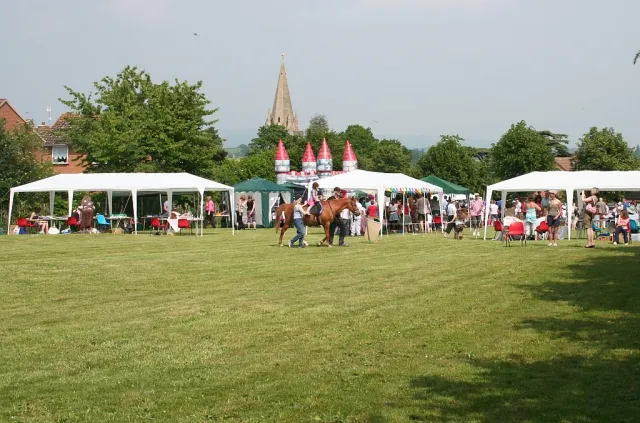
Photo: Bob Embleton, CC BY-SA 2.0, via Wikimedia Commons
There is a particular smell to a village hall in summer. Floor polish, faintly warm squash, the ghost of last week's yoga class, and underneath it all, butter. You know the room. You know the handwritten sign taped to the door, the raffle ticket in your pocket, and the woman with the money tin who has been doing this since the 1980s and has no intention of stopping on your account.
The cake stall is the beating heart of it. Everything else at a fete is scenery: the tombola that nobody wins, the bric-a-brac nobody needs, the dog show in which the winner is always a spaniel called Bramble. The cake stall is where reputations are made, per fifty pence per slice.
So we recreated the table at home. Same wobble, same slightly too-small plates, same drama. Here is how the field finished.
Setting the Judging Table
The rules were borrowed from the produce tent and adapted with care. Cakes must be judged at hall temperature, roughly the warmth of a car boot in June. Every entry must survive being carried across a room on a paper plate while somebody holds a raffle ticket in the other hand. And the judging must be done in the open, because half the joy is the commentary.
Four categories, ten points each, forty in total.
What We Were Actually Looking For
Slice appeal covers the first three seconds: the look of the cut face, the evenness, whether the icing has made a bid for freedom. Icing technique is not about fancy piping. It is about whether the icing was applied with intent, and whether it will end up on a nose. Crumb structure is a polite term for the bit everyone actually cares about: is the sponge soft, is the flapjack chewy, does the whole thing collapse on the fork. Nana approval is unquantifiable and therefore dominates.
Sixth Place: The Cling-Film Traybake — 24/40
Let us be clear, we are not against it. A traybake is a public service: it cuts into twenty, it travels well, it has never once been described as dry. But the cling film has been on since seven this morning and the corners have gone soft, and somewhere under there is a layer of icing that will not meet anybody's eye. Slice appeal took a knock. Crumb structure was fine. It scored well on feeding the queue and poorly on romance.
Fifth Place: Fairy Cakes — 28/40
Charming, chaotic, structurally unsound. Fairy cakes are the only bake on the table designed for a person whose hands are smaller than their enthusiasm. The icing technique varied wildly from entry to entry — one was a careful swirl, one had been approached with a butter knife and a dream — and the cases had begun to peel, as they always do. Points lost for the cake that had sunk in the middle and been disguised with an extra spoonful of icing, which fooled nobody but was, frankly, admirable.
Fourth Place: Flapjack — 31/40
Here is the thing about flapjack: it is not a cake, it has never been a cake, and it is the only item on the stall that you can put in a coat pocket for later without being judged too harshly. Our entry had the correct chew — pliable but with a bit of fight — and a decent crack across the top. It lost points only because slice appeal is not its game. It looks like a slab. It tastes like a hug. A solid fourth, and a strong argument for third place if the oat-to-syrup ratio had been more reckless.
Third Place: Coffee and Walnut — 33/40
The quiet one that everybody forgets and then finishes first. There is always a moment at a fete when the queue looks at the coffee and walnut, looks away, and then comes back to it four minutes later with a quiet sense of shame. Our version earned a full eight for crumb structure: light, just damp enough, with the walnuts doing their slightly bitter, slightly important work. Icing technique was a triumph of restraint. It did not win because a smaller child described it as smelling of grandad's car.
Second Place: Lemon Drizzle — 36/40
So close. The drizzle had gone in properly, which is not a given; too many versions are merely a loaf with strong opinions. Ours was sharp enough to make the back of your jaw feel something, and the sugar crust on top had set into a thin, satisfying glassiness. Slice appeal was excellent, the paper cases were irrelevant, the whole thing disappeared in eleven minutes. It only lost on nana approval, which is to say my grandmother said it was lovely and then took a second slice of the sponge. We read that correctly.
First Place: The Victoria Sponge — 38/40
A predictable winner and a deserved one. The Victoria sponge is the benchmark against which every other entry is, whether it likes it or not, measured. Ours had two even layers, jam that had been spread thinly enough to avoid the dreaded slide, and no cream in the middle because the fete is held in a hall without proper refrigeration and everybody knows it.
Slice appeal nine. Icing technique is not really the point here, so a polite eight for the dusting of caster sugar, applied with the confidence of someone who has done this before and will do it again next year. Crumb structure nine. Nana approval twelve out of ten, which broke the scoring system and could not be appealed.
The Unwritten Rules of the Stall
Always take the slice nearest the front, because that is the one that has been cut already and you are holding up the queue. Always put the money in the tin rather than in someone's hand. Never announce loudly which cake is the best one, because the person who made the other one is right there, arranging napkins.
And always accept the slice wrapped in a napkin for the journey home, even if you are not going home for four hours and it will be a warm paste by the time you get there. That slice is not food. It is a small edible reminder that somebody thought you might want one.
The 2026 Champion
The sponge takes the rosette, the lemon drizzle accepts defeat with dignity, and the traybake is already being rewrapped in the kitchen for next year. Same table, same tin, same quiet rivalry. We will see you at the stall.